

Jagriti Yatra: The Mother Of All Roller Coasters
Okay no, so it’s not an actual roller coaster.
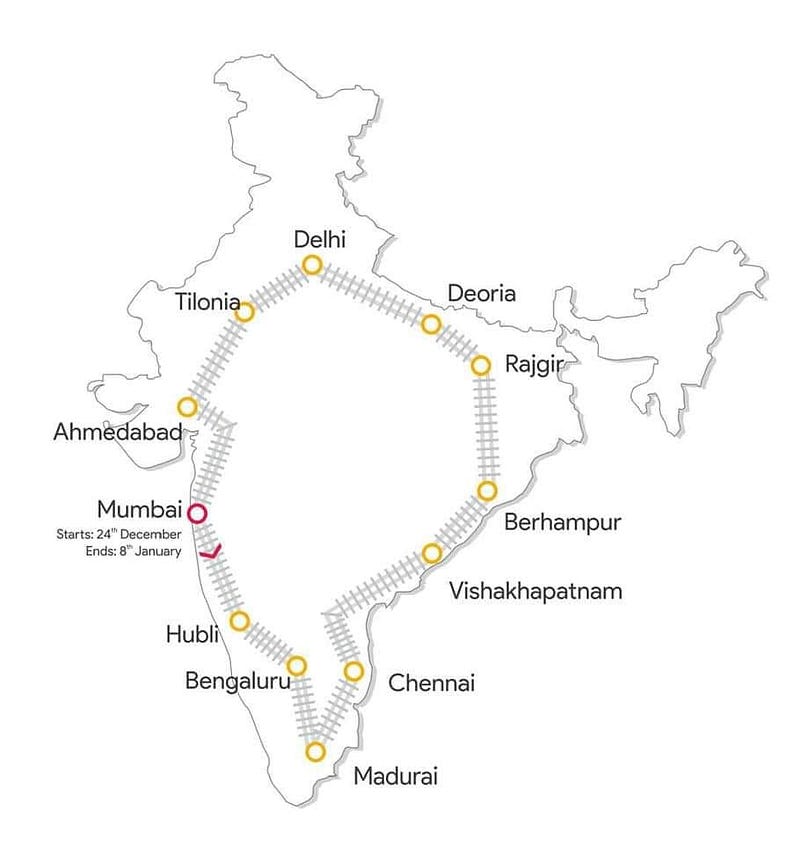
Jagriti Yatra is a fifteen-day 8,000-kilometer train ride that lugs over 700 people around India with the ambition of igniting their entrepreneurship spirit. The train goes from place to place, visiting local social entrepreneurs that have already dented the landscape in largely positive ways.
I couldn’t have found a more perfect set up for an introductory crash course on the impact space in India.

This long-tailed journey is by no means luxurious. It’s anything but. You’re squeezed into bogies that are non-AC (a traditional Indian 3-tier if you know what that is), sleeping somewhere on a triple bunk bed that averages six feet by three feet, using squat toilets and showering with buckets, all the while hoping that the water doesn’t run out as the train tries to cater to the hygiene of 700 people.
But that’s the point. It’s not supposed to be comfortable. It’s supposed to be real. Add that reality check to a supremely diverse group of Indian youth, and what emerges is a roller coaster of conversations, emotions and experiences.
So yes, Jagriti Yatra is somewhat of a roller coaster. And all-in-all, like most roller coasters, this roller coaster was a ton of fun.
Induction
For our Yatra, there were about 450 participants and about 250 support staff who were living on the train (think everyone — from the CEO to the pantry staff to the cleaners). The participants or the “Yatris” were divided into around 65 facilitators — the older, supposedly wiser crew — and about 400 younger Yatris who averaged at about 24 years of age. What united us all though was a hunger to learn more about entrepreneurship and nation-building.
Since I was slightly older and supposedly wiser, I became a “faci” — short for facilitator (but way too close to fascist). Each “faci” was assigned a cohort of six younger Yatris who we had to guide or facilitate while explicitly avoiding any form of paternalism. So far, spot on and not very fascist.
The induction process was a well-organized ball of chaos. There was flag-waving, dancing, key-note speakers, registration forms and quick health check-ups (really quick). We were also introduced to a ritual of sorts — a song and dance that everyone was supposed to partake in. And the kicker — we would be doing this ritual at every stop, whenever we could and with as much energy as possible. When I sent over a video of this to my friends, the responses averaged out to: what cult have you joined?
All cults are not bad though, right? As long as they weren’t spiking our drinks with anything.
The First Stop
Our first stop was Hubli in Karnataka. It was a day and half worth of low-priority train time from Mumbai. And since it was our first stop, I was itching to get out and see.
Each stop had a “role model” who is essentially a seasoned entrepreneur turning the tide, one wave at a time. They talked to us about the waves they had conquered, hoping to seed ideas and inspiration, especially among the youth.
In Hubli we visited a semi-alternative school run in a village by some kind foreigners. It is a free school run on donations that provides schooling to the most in need in the village where it is. They use music, dance and art to mine minds while floating in a campus supported mainly by solar energy and trees. It was peaceful there — the kind of peace that is only extenuated by the innocent rapture of a child.
But what I quickly started to realize was that this Yatra, this journey, was less about the stops and the ‘role models’ along the way. It was more about the people living on the train.
Conversations
It’s quite the logistical nightmare to transport 700 people across 12 different places in India in 15 days on a train whilst also feeding the hive four times a day. Also, since our train was a private train, it was classified as low priority. Which meant it moved along at the fancy of the Indian Railways. Which essentially meant a lot of ambiguity. Let’s just say that uncertainty and logistics don’t go well together.
Once we arrived at a stop, we were loaded into ten buses and transported to the village or the social enterprise we were supposed to be enlightened by. Since this happened every day, it’s safe to say we spent more time on the train and in buses than at a stop. This meant that there was time for conversations with people living on the train. A lot of time. Luckily, that just happened to be the best part.
For instance, my cohort had six guys from six different states — a Kashmiri who runs a school there, a Maharashtrian with an MA in English Literature, a PhD student from Odisha, a Bengali who studied at the Aurobindo School in Pondicherry, a Hyderabadi ethical hacker and a budding entrepreneur from Delhi. Not only was there diversity, but there was also a ritualistic energy that brought us together.
And the sheer proximity of living together quickly transformed the formal exchanges into informal fraternity. We tried to have check-ins and check-outs every day as a cohort. While we weren’t always successful, we talked about everything — our goals, our feelings, our opinions. And I learnt more from them than they can imagine.
It was a safe space. Safe enough for the Kashmiri to share what he wouldn’t have had the courage to share in Kashmir. Safe enough to talk about sex and sexuality that just seems so voodoo in most of India. Safe enough to talk about all sides of a story that is gripping India right now and has ripped India apart in the past.
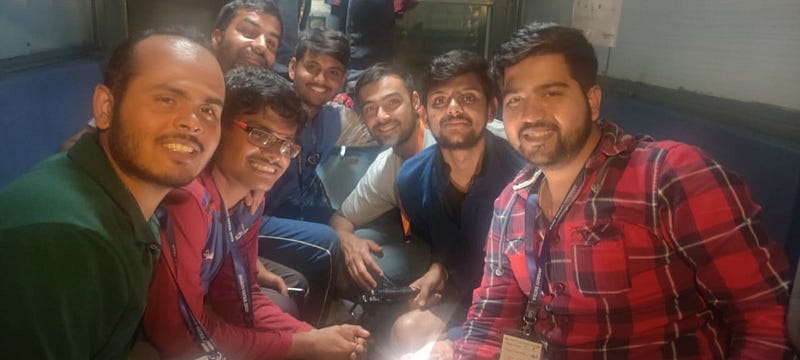
That was just my cohort in our little compartment. There was more energy exuding from compartments next to us and bogies beyond ours. And it wasn’t just the Yatris, we also had seasoned entrepreneurs, educators and thinkers from across India living on the train. They brought in a sense of sophistication and perspective that filled the rawness of the youth with colours unseen.
The nation of people on the train served my hunger to learn about India with ideas that were foreign to my foreign upbringing. They challenged my inner journey like no other, adding dimensions to my morality that only the clarity of experience can corroborate. Where else was I going to find 700 people from different parts of India from different economic backgrounds looking for purpose, looking to nation-build? Even if I did find them, how was I going to convince them to be locked in on a train for fifteen days and have conversations with me?
There was an excess of conversation potential. An excess of a potential to learn about India in a way that no book or no documentary can encompass. We were spoilt in the most wonderful of ways.
The First “Shower”
My first shower took place a couple of days in. It was a fist fight among prisoners. No, not really. But we did battle for water, buckets, mugs, permission and we were technically trapped on a train. So, yes maybe it was a passive aggressive fist fight of sorts.
Water only gets filled at certain stops, and since there are about 700 of us wrestling for it at somewhat similar times, it is a precious commodity. There are about twelve curtained compartments in a bogie upfront for about 400 men to share. You’ve got to play it smart. It needs to be a balance between how early you’re willing to get up, how cold you’re willing to feel, how long you’re willing to stand in line and when the water tanks get refilled.

We were stuck at a station (low priority train, remember). The water was out. We were sticky and smelly after a long day out. I saw a couple of people in desperation take a bucket from the shower bogie, go to the public tap at the station, fill up their bucket and muscle their way back to steal a bath. Brilliant. I was getting a little desperate too.
I rounded up a couple of bath-hungry folks from my bogie and we looked to replicate this ingenious plan. We grabbed a bucket each and hustled towards the tap some ten bogies away. But, a twist — we were stopped by one of the organizers. I say “stopped” a little sheepishly here because apparently, we were doing something wrong. As a thirty-year-old stubborn man, I clearly didn’t like illogical restrictions. The train was at a standstill. The water was out. We were smelly. And the tap was right there. I argued (obviously, principles) but to no avail, and succumbed to an unconvincing “no is no” argument. While I was arguing for my rights, one of my accomplices sneaked across to the tap successfully, so at least someone benefited.
Upset like a little child, I huffed my way back to my bogie, contemplating schemes to sneak a bath in. Admittedly some of my schemes were probably a little too dastardly so I’ll spare you the judgment. When some sort of inner stillness was restored, we asked the bogie guard when the next water refill would be. He confided, we scheduled and then we conquered.
It was the most wondrous bucket bath I have ever had.
Never have I ever planned so extensively for a “shower”. But I also learnt that this was pretty much the norm in many hostels and parts of India. Probably with less scheming, but definitely with a lot of buckets.
A Blurring of Sorts
Our second stop was Bengaluru. They had setup a fair full of social entrepreneurs and non-profit leaders there. It was interesting but I wonder what incentive the enterprises had to be there. We weren’t looking for jobs, just for enlightenment. I’m not complaining though, it was fascinating.
We then snail-ed our way to Madurai to visit Aravind Eye Care. I was particularly excited about them because they are the epitome of a social enterprise. But we arrived horribly late, so we didn’t see any of their eye care centers, just heard some people speak. That itself was incredibly inspiring. For instance, they are currently working with Google to use machine learning to detect early onset of blindness. After their presentation, there was a panel on healthcare in India that was interesting, but I would have preferred to have been out there seeing Aravind’s world instead. And then we got stuck in Madurai at the station for way too long, because low priority, remember?
Chennai was next and we were blessed by the heavens above to get an inside glimpse of ISRO. We also spent a second in SriCity and then scrammed.
In Vizag, we got to see how Akshaya Patra delivered mid-day meals across the country. They are operational geniuses — for instance they evolved a machine that made 2,000 chapatis an hour to one that makes 60,000 chapatis an hour. 30x. Legends. But I wonder how they verify whether the meals they serve help solve hunger and malnutrition on a more permanent basis. The whole teach-a-man-how-to-fish argument.
Behrampur in Odisha was next where we visited a village amped up by Gram Vikas. Rajgir followed where we saw the peaceful Nalanda University ruins in the morning. Apparently, there were so many books in that university that the Khiljis took three months to burn it down some thousand years earlier. Post lunch, most of us took naps in the auditorium while some people spoke on stage. It was getting cold; the train wasn’t really comfortable, and we had heard enough about the vision of Jagriti Yatra and the Women Center of Excellence. A dip of sorts for sure, and the beginning of the blurring.
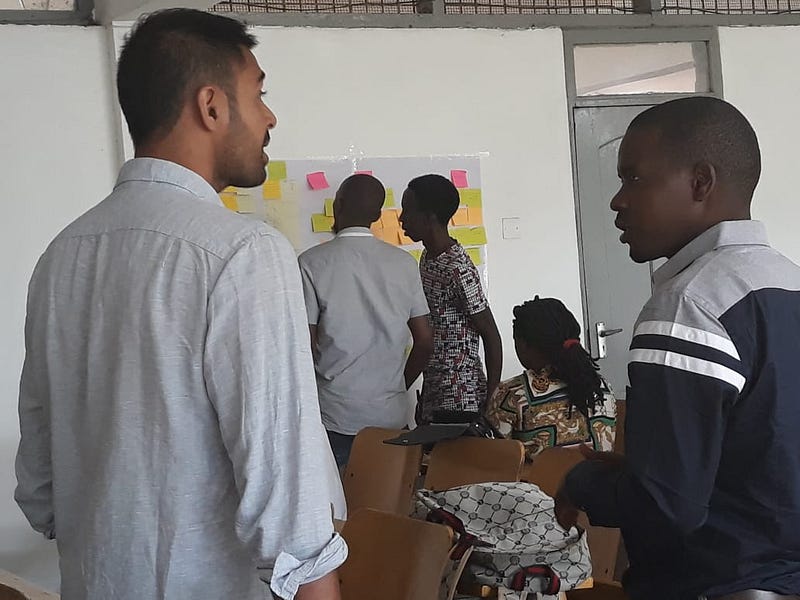
Deoria in Uttar Pradesh was next. We got to survey folks living in remote villages in a district that really struggles. It was probably the most insightful visit. We also did a quick build-a-business-model exercise around this where groups presented their ideas not through a PowerPoint presentation, but on chart paper instead. Unique, but you’re never going to build financial projections on a piece of paper today.
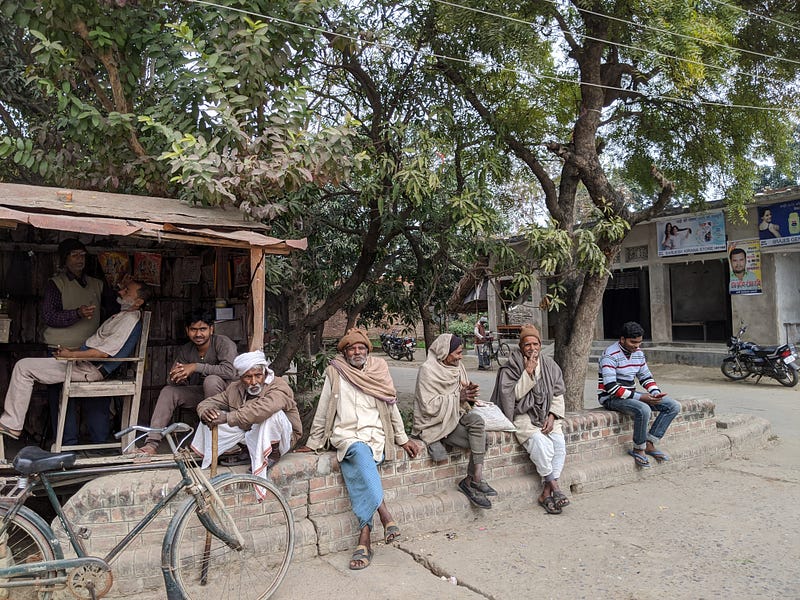
We didn’t sleep on the train that night. Instead we were squeezed into rooms in an abandoned school in Deoria. And no, nothing fancy, in fact it was worse than the trains. 15–20 of us were marshaled into rooms, many without doors, and in particularly cold weather. It seemed unnecessary but apparently the idea was to experience spending a night in a village. It didn’t all add up, but we did start appreciating the train more after.
Delhi was next, and the blurring was pretty much in full flow. I remember I had to go back to the Yatri Guide to recall where we had been, and where we had seen what. I’ll attribute that to a lack of proper sleep. Most people in the train were now coughing — a combination of cold weather and human proximity on the train I reckon. We still managed to sleep through a lot of that though. Humans adapt pretty damn quickly.
In Delhi, we met Anshu Gupta from Goonj. Goonj is doing some incredible work and Anshu is a passionate orator. He lit a fire up a lot of the Yatris who weren’t as sold on the importance of making an impact which was admirable. My fire has been lit for a while, so I was a little put off by the alarmism that Anshu employed. Effective, but not my cup of tea.
A lot of the Yatris that lived in Delhi took this opportunity to sneak out and get a proper shower in. This was controversial because this wasn’t technically allowed. Discipline oh discipline.
Discipline
An important tenet of the Yatra is discipline. Transporting 450 participants in a train at breakneck speed is not easy. Rules and discipline are key. Makes sense. One of the rules is that you’re not allowed to leave the train or any of the premises that we visit. Makes sense.
But maybe, a gross interpretation of this rule begs a debate? For instance, I was not allowed to go get a coffee from a canteen that was 20 meters away and within the premises of where we were. As a thirty-year old adult, this really rubbed me the wrong way. I obviously didn’t listen because principles. But then I was threatened of being deboarded off the train. And I was also asked to write a formal letter of apology. I did laugh out loud at this (and obviously didn’t write the letter), which really didn’t help my case. Yes, at one point, I was guilty of being rude. I owned up to that and apologized for it. But principally, I did feel this was a bit ridiculous. Versions of this happened to me more than once, and I wasn’t the only one. At least I was willing to put up a fight, most just sneaked out instead.
This obviously led to a lot of internal debate which I externalized pretty quickly. The other side of the debate is that exceptions are costly, so a strict implementation of the rules is important. Easing the rules or allowing exceptions leads to a bad precedence, and chaos could ensue. Fundamentally, I agree with this.
Where I was stumped was with the target demography. The 450 participants averaged to around 25 years of age, and were selected from over 2,500 applicants, and were touted to be a representation of the best of India. The question that I struggled with was that if these are the best young adults of India, can they not be trusted to take a few minutes out to go get a coffee? Can they not be trusted to make a quick visit home to take a shower while they are in the vicinity? Is that too much to ask?
I did ask these questions to other people on the train. And this is where it gets complicated. The Yatra takes responsibility for people on the train. One bad apple does spoil the bunch and could have a terrible impact on the reputation of the Yatra. Also, people from different backgrounds have different levels of freedom. For instance, younger women from more traditional homes only barely get permission to go out on a fifteen-day journey by themselves. Freedom could be a different concept for them. Their parents could be a lot more particular about how strict the rules at the Yatra are.
But then the alarm that go off in my head is are we solving for exceptions? Is that even pertinent, especially when people are sneaking out anyway? And this, quite dramatically, leads me to think about the general impact of paternalism in India. Does excessive amount of paternalism come in the way of maturity? Does it delay it? Does it encourage rebellion?
The answer as always lies somewhere in the middle. I think with the Yatra, a middle ground could be that if someone wants to leave for a few, they must fill a quick liability release form. This lifts the burden off the organizers and puts some physical toll on the participant, while maintaining the illusion of freedom. But yes, rules are important, and their strict implementation is needed to avoid chaos.
Also, it was interesting to see how the 65 facilitators broadly auto divided themselves into two different camps of thought around this. One side seemed more pro-independence and the other side more pro-rules. Less control versus more control. Bear the discomfort versus fix the discomfort. I skewed more towards the “less-control” folks, but my upbringing isn’t necessarily the norm.
I need to read up more on the more existential question of the impact of excessive paternalism on maturity. The key word here is excessive. A balance is what always seems to be the answer — just the right amount of paternalism, maybe? What’s the “right” amount though? Haha now we tread on realms of infinite regress.
The Bunker
After Delhi, Tiloniya in Rajasthan was next. That’s where Barefoot College was born along with the legend of Bunker Roy. After walking around the solar-powered campus, we were treated to a session with the legend himself.
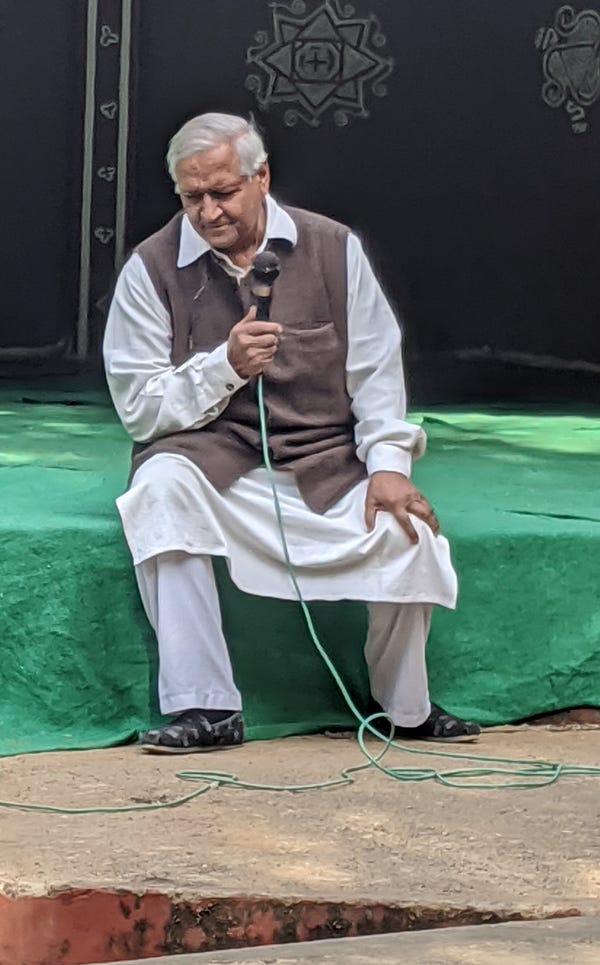
Bunker Roy appeared, sat down on stage and threw the floor open for questions. It was all a little mystical in the most wondrous of ways, and this is coming from someone who doesn’t believe in magic. He championed a level of depth that only comes from having skin in the game. Some real deep skin in the game. The wisdom flew off his tongue as easily as his demeanour. As gently as his voice. As compellingly as his presence.
Start small, he said. Do more and study less, he said. Be where there needs to be work done, not locked away in an office in some skyscraper, he said. All the while he embodied the aura that natural leaders exude — an aura not restricted by norms, but instead empowered by the confidence to reshape them. There was a sense of authenticity that no one can pretend to put on. This was him through and through. He had already walked his talk.
And I sat there, a little teary eyed, yearning to be a version of him.
At Peace
Ahmedabad was our last stop. There was an element of lethargy in the air. We were a lot more comfortable with each other and the conversations were a little less exciting. I was looking forward to a nice hot shower and a warm bed free from vibrations that was larger than six feet by three feet.
The rules became a little lax. There would be no roll call in the train that night. A little less than half the participants were going home after the graduation ceremony. Don’t know what we were graduating from, but there was a formal closing ceremony later on that was nice.
We were at the Gandhi Ashram, sitting at the edge of the Sabarmati river. I felt at peace. Familiar faces all around. Photos being taken out of a desperation to preserve the current bliss. Conversations getting personal and more relaxed. Silence becoming comfortable. It was as if all the ingredients were in place for a perfect reflection.
I came to the Yatra with two distinct goals. One was to get to know India a little better and the other — more personal, more daunting — was to see if I could fit in as an Indian among Indians. I hadn’t lived in India in over twenty years. Yes, I visited regularly, but I was defined by a different set of borders of which the Indian subcontinent was just a subset. I was someone who has been everywhere but is from nowhere, and all of a sudden, I was craving belonging.
I did get to know India better, but it wasn’t by visiting the different places, it was mainly by the people on the train. People who came from all parts of India, from all types of religions, with different languages and different economic backgrounds, and from the conversations we shared. There was common ground to be found in reason, in purpose, but it stemmed from varying perspectives and contexts.
I got exposed to a different form of thinking. A form of thinking that forms the bedrock of Indian culture which is often marred by convenient interpretations. But that doesn’t mean that the Vedic life is inapplicable today.
I embraced my Indianness more than ever. For once, eating your heart out with your hands and licking your fingers after was the norm. It didn’t matter that many of us got our Vs and Ws mixed up when we enunciated, we still understood each other. Claps were doled out like currency, a worthy cheap form of positive expression. And we Indians love acronyms way too much — wouldn’t mind if that changed.
I also learnt that reaching a conclusion after every argument is not always necessary. Sometimes it is the depth of discussion that matters more, the nuances. There was a panel on women empowerment which when asked about discrimination against women, said that they were not discriminated against — in fact, as women entrepreneurs, they felt they had a slight advantage.
Then there is the other side to the women rights movement where certain laws treat women differently than men in India. For instance, a man can serve up to three years in jail if he gets convicted for sexual harassment but there is no such explicit law made for women. There’s obviously good reason for this, but it also does portray an unneeded disparity. Someone in my cohort bought this up — “I don’t sexually harass women but why are they protected by law and I’m not? Equality goes both ways.”
There was also the voodoo topic of sexuality and sex. There is no proper sex education in India, and sex is considered such a precious, restricted and sacred commodity. I can’t help but think how sexual repression correlates to abuse. It’s not an excuse, but it could be a factor.
I got on the train while the country was in the middle of extensive CAA protests. I was expecting intense amounts of passion on the train around this, but it was a lot calmer than I expected. There seemed to be both anti and pro sentiments, but none with the amount of gusto I see on social media or among people who identify as Indians but who live outside of India. Either it was fear that censored their passion, or it just wasn’t as important to the folks as it seemed from the outside. I think it’s the latter.
I know I live in a privileged, left-wing bubble, and this experience further cemented that as true. Problems and priorities are different for people with different privileges. And when you’re still taking bucket baths or practicing open defecation, a law that directly impacts 0.003% of the population might not matter as much.
The people I got closest to on the Yatra called me ‘Angrez’ (“English”). That was almost like a violent attack on a deep-rooted insecurity around my Indian-ness, but it turned out to be a term of endearment. I blended in soon enough, leveraging humility and humour to find common ground, and accepted what needed to be accepted — I am different. Just like everyone else is in their own way. So obvious. So simple. So cliched.
I don’t think I would do this a second time, but the first time was well worth it. It pushed me in all directions, from discomfort to comfort. From embarrassingly broken Hindi to my supposedly intellectual English. From uneasy living to easy conversations. From zero to hero to zero. It was a friggin’ incredible roller coaster. And the best part about it was that there was no real safety belt.

Nairobi & Beyond
“This doesn’t normally happen around here,” My new boss explained, a little worried.
It was the first day at my apprenticeship in Nairobi, Kenya. The police had tear-bombed a mob in the busy slum of Kawangware where our office was located. The rumour was that someone had been shot, so the mob had circled around there, essentially sectioning off the cops from getting access. So, as any rational law enforcement body would do, the police tear-bombed the area to disperse the crowd.
There was a lot of scampering around us. The braver ones in our tiny office rushed over to the window to get a glimpse of the commotion. The tear gas only scarcely made it into our room as we were on the second floor. It was enough to get our eyes all misty, but not enough to have to pull them out of our sockets.
Nairobi was supposedly my last stop before I headed to India. But right now, I am in a coffee shop in London. Not quite India, but the ‘plan’ is still in place. I’ll get to it.
After over a year in Guatemala, nine months longer than ‘planned’, I knew that my stint in East Africa had to be a little more constrained – no more than six months. If the goal is to start something in India, I can’t just keep frolicking around the globe, delaying the inevitable. But working in Sub-Saharan Africa seemed like an important step in this custom MBA of mine.
Shoddy as this sounds, the income per capita, the infant mortality rates, and disease-inflicted deaths in parts of Africa are among the gravest. Add that to the exploding youth population, the lack of jobs, and the rising temperatures, and what the continent is drifting towards is a largely young population of two billion by 2050, struggling to find employment as the world boils over. There could be a lot of other things that boil over as well.
But don’t get me wrong – there has been a ton of progress over the last few decades. Overall, as much as we shouldn’t generalize, African countries are freer and more developed than they have ever been. There has been innovation and expression, a better quality of life, and a Twitterverse exploding with opinion. It’s better, but there is still a long way to go. And that’s why there is a lot of game-changing work being done there, especially in the social sector. So, I had to work there. This time I was looking for more depth – i.e. working more closely with a couple of entrepreneurs, rather than at a more superficial level with many entrepreneurs, which was the case in Guatemala.
A random spam-ish email landed in my inbox that talked about a certain Amani Institute. It was new but what I liked about a program they offered was that it involved a four-month apprenticeship in Nairobi with local social enterprises / NGOs. It also promised just enough coursework in some of the softer skills that I had been craving, but wouldn’t necessarily stretch for – leadership, management – some of the soft stuff that had haunted me towards the end of my stint in New York. Bingo. I applied and soon thereafter, I was on my way to Nairobi as an Amani Fellow. I would have gone either way, but I was glad to go there with some structure.
The six months in Nairobi were intense. We worked for three days a week and had classes three days a week. The Sunday that was left hanging, left us fellows only wanting to hang around and do nothing. I was apprenticing with a social enterprise that was trying to fight poverty through job creation in the urban slums of Kenya – yes, the one I was tear-bombed at on the first day. More importantly, they are trying to do similar things to what I want to do in India. So, the learning curve was as steep and healthy as any wealthy education, if not more. They did a lot of things well, but where they struggled was in finding operational prowess. Sadly, in the impact space, this is common.
While there is a ton of passion and drive in the social sector, there aren’t enough seasoned operators or technical folk. Add all that to the meagre pay, and what you’re left with are inefficient organizations with tiny technical expertise and gigantic hearts. Burn out is more common than you’d imagine and it happens without any splurging compensation that at least some of the corporate burnouts can fall back on.
The six months whizzed by. But it felt like I had been there an eternity, making new relationships and adapting to a new culture. It's strange how time loses it structure as we sway from one perspective to the next. I left Nairobi more ready than ever. I felt both validated and enlightened. I might have been extorted by bad cops with a gun in broad daylight, but I acquired a deep experience that has geared me up for my next steps. I want to champion the change I want to see in the impact space – this asymmetry of incentives, operational weakness and a lack of scalability and sustainability.
But I have also learnt that this is going to be hard. Starting a successful for-profit is in itself a probabilistic minority. Add the cost of impact to that and what I have signed up for becomes exponentially harder. But that’s okay. I am not doing this because it’s supposed to be easy. I am fortunate to not have to worry about going hungry, and morally, it’s hard to argue against marrying what I should do and what I want to do. For the last two years, I have been closing the gap between the moral ‘ought’ and my internal want, and surprise surprise, I have never been happier, more content, more focused and more determined. The honeymoon phase should have passed by now, so what has remained is clarity that only consistency can fuel.
So, what am I doing in London? Remember the lack of operational prowess and technical expertise in the impact space I was talking about? Well, I don’t want to be that cliché or at least that is my current rationalization. Yes, I can sing some decent finance tunes, but that might not be enough. One thing I realized in Nairobi is that I know enough about working in the impact space to start something on my own, but what I might be missing is some more technicality. I found this immersive Data Science course that General Assembly offers in London. It’s a twelve-week bootcamp that tries to download at rapid speed everything it can about Machine Learning and Data Science. Magically, I had twelve weeks to spare, so here I am. I am halfway through the course, and I feel like I have opened a new box of possibilities that is so empowering. I am not going to be a Data Scientist, but I want to use Data Science to make better decisions – to do better research, better monitoring and evaluation, and most importantly, to better allocate resources to solving this shitshow of a problem that is poverty. And as a bonus, I get to spend three months living with my best friend. When else am I going to get a chance to do that at this age?
It’s not all hunky dory though. One of my mentors called me out on this – Anish, are you just delaying going to India and starting something? While he makes a fair point, it’s only three months and I am not technically delaying when I go to India. According to the ‘plan’, 2020 was when I was supposed to be in India, and my tickets are already booked. I reach India on the 21st of December, 2019. I am excited, so friggin' excited.
But I am also scared. There is this massive cloud of uncertainty hovering around – what will I be exactly doing in India? When will I find out? When will there be some stability? And here’s the kicker, this current uncertainty is essential. If I knew it all, there would be a high probability that I was delusional, or at least being naïve. I am going to be spending the first year in India researching, prototyping and validating different solutions that holistically address the problem. I can’t rush this but at the same time I can’t take forever. This is a long-term game that I am playing and that implies unrushed progression while always finding the right range of balance between the extremes. Delayed gratification is the secret to life, however hard it sometimes is to not give into immediate temptation.
At the same time, maybe, I am attaching myself to this idea that I am going to find the ideal solution. That’s not smart either – I might be setting myself up for cognitive hell. So, I am trying to focus on starting small. I am trying to disconnect from building up something that might be too idealistic to process. I am trying to train my morality to account for all the distractions that might scuttle me. And the best part about this is that this is exactly what I want to be trying to do.
Nairobi played its part like a perfectly written textbook for what I wanted to learn. I added some beautiful people to my network of love. I also felt the bitter sting of immorality, hoping to come out stronger. I might have been tear-bombed and extorted, but I also danced on the beaches of where nature might be as wild as we can imagine. For all that and more, I am only better, yet aware that there is still a long way to go.
A Bridge For Change In Tanzania
Ocheck Msuva’s story needs to be heard.
Rejection
Ocheck’s existence began with rejection. When his mother found out that she was pregnant, his father refused to accept her pregnancy. He was born much to the chagrin of his family, who lived a poor life in rural Tanzania. So much so that Ocheck was sent to live with his aunt. His aunt gave him shelter but never took him as one of her own. When you don’t have much in this world, even blood isn’t enough to warrant love.
The first time Ocheck tried to kill himself was when he was twelve. Early education is technically free in Tanzania if you can pay for your own uniform, supplies and examination fees. His aunt refused to buy him a uniform for school, espousing the burden of taking care of Ocheck in addition to her own children. And this was the final straw. If nobody wanted him, why exist? He found a tree, and some rope. While trying to setup this killing contraption, some people happened upon the tree. Scared, he ran.
The second time Ocheck tried to kill himself was when he was fourteen. He had stolen a uniform from a neighbour so he could somehow make it to school. But after dragging on for a couple more years, life still did not seem worth it. This time he found some pills. But fortunately, or unfortunately, they weren’t enough. Fate can be cruel to even the most innocent. Belonging is how humanity has survived and thrived through the ages, and to deprive a child of it at his most malleable and vulnerable time is to give him no reason to live.
Hitting The Streets
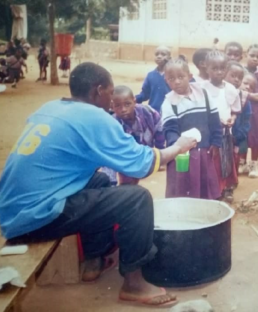
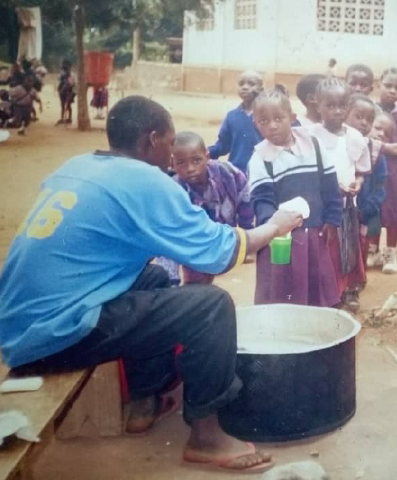
At fifteen, Ocheck felt that enough is enough. It was time to try this “life” thing on his own. He dropped out of school and ran away from his aunt’s place to live on the streets of Iringa. The streets bought him a little more luck. He found small jobs to survive. He cooked meals for kindergartners and at one point, even opened his own little street stall that sold fries outside of a church. He saw wealth, not his own, but of his rich employer who he worked for as a house boy. He once told the wealthy man who employed him that he dreamed of going to university and becoming someone. To this, he replied, “If a foolish person says stupid things, I normally do not listen.”
This crushed Ocheck. But his takeaway was that even the wealthy can be miserable. And early on, despite not having anything, he learnt that maybe money doesn’t bring you happiness. Through all of this, Ocheck still held on to a dream. And as cliched as this sounds to us, that dream of being someone, standing for something and belonging, is what kept him going
.
A Dream
Done with the street hustle and with a little money in his pockets, Ocheck went back to school. He started focusing on his classes and his scores rose. He spent his Sundays as a pastor, preaching and singing in the local church. His excellent grades got him admission into the University of Dar Es Salaam, and he took on a loan to fund his bachelor’s in political science there. Slowly but surely, Ocheck finally found his rhythm and his dream of becoming someone started turning into reality.
During and after University, Ocheck scored some well-paid gigs courtesy of the seeds he had sowed earlier. This gave him a bit of money and the gears in his head started turning. He realized that there were thousands of kids like him who had been discarded from their families and had nothing. He realized that there were thousands more whose dreams had withered away because reality was just too real. Ocheck believed that the only reason he survived was because he had a dream. And against all odds, he made his dream of graduating from University and of becoming someone a reality. He believed that if he could give the youth of Tanzania the power to dream again, and the encouragement to give their dreams a chance, he could instigate real change in Tanzania. So, in 2015, with the bit of money he had saved up, instead of looking for a comfortable, well-paid job, he decided to start Bridge For Change.
Being The Change
Bridge For Change (BFC) was created to empower the youth of Tanzania through training sessions, career support and mentoring. It blossomed quickly. Within three years, it had impacted over 18,500 students across 38 schools, and had mentored over 600 students at a deeper level while working with the likes of UNICEF, Vodacom, The Goodall Foundation and Cambridge University. BFC held “dreamscaping” sessions where school students were encouraged to draw out their dreams and then to find a path that took them there. And in the middle of all this, stood the inspiration of Ocheck — a testament to the fact that despite the gravest of odds, it only takes a dream to garner hope and strive towards the seemingly impossible.
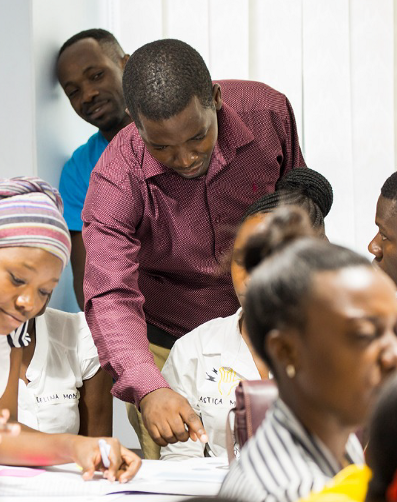
In mid-2018, Ocheck started to feel that something wasn’t quite right at BFC. They were growing and making impact but were wildly dependent on their donors. What they were doing was not scalable. It felt like all that was important was ensuring that their donors were happy and that they were hitting the ambitious impact numbers demanded by them. There seemed to be ample width but not enough depth. All this made Ocheck hit the pause button and re-evaluate what the right next step for BFC was. And that brought him to Nairobi.
When I Met Ocheck
I met Ocheck in Nairobi as a part of the Amani Institute program. He was a fellow there trying to figure out where BFC needed to go and I was a fellow there hungry to learn by working in the social enterprise space. We couldn’t have come from more different backgrounds. While Ocheck’s aunt was looking for ways to get rid of him, any of my aunts would have adopted me in a heartbeat. I was blessed with an incredible family that pushed me beyond my limits. I didn’t need a dream to survive, instead I thrived on the fear of not making my dreams a reality — I had it all, how could I not?
Ocheck’s story is compelling but what sealed it for me was his ability to face the brutal facts. He told me that there are some significant systemic issues in the education system in Tanzania which severely impact the productivity of their youth. He said that they need to stop pretending that the solutions can only be found in Tanzania. “What’s important is that we find the best solutions for our youth, irrespective of whether it is from inside or outside of our country.”
This honesty struck a chord. Half the world talks about the “white saviour” issue engulfing most of Africa, and here you have a Tanzanian, who has been to hell and back, who is willing to put his pride aside and is committed to finding the best solution for the problem he has himself struggled with, irrespective of whether it comes from a Tanzanian or a “white saviour.”
Ocheck had enrolled in the Amani program looking to transition BFC from a typical non-profit to a more financially sustainable social enterprise. That’s where I saw an opportunity to add value. The Amani program allows fellows to pair up and work on projects together. This project was real. Ocheck was real. So, I started making my case, and he bought in.
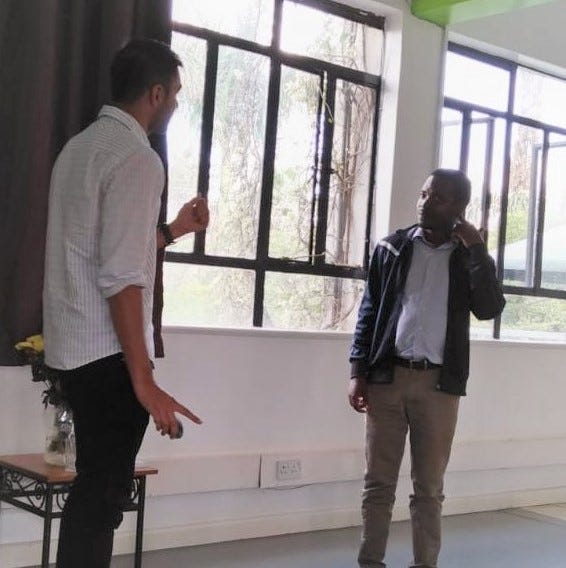
In the next four months, we stripped down the organization and started to build it back up. We re-evaluated the extent of the youth productivity problem we were trying to solve in Tanzania and the numbers were glaring. We juggled ideas ranging from trying to create jobs by catalysing wheat farming in rural Tanzania to formalizing the informal real estate labour force. We finally settled on something less ambitious but more realistic. We didn’t want to part with the ambitious ideas though so we put those aside under the label “eventually.”
It was not all hunky-dory. Ocheck and I have different skill-sets with different working styles from different cultures. I am almost infested by the hustle and bustle of maximizing productivity from my Corporate America days — low in patience, high in productivity. Ocheck embodies a different kind of hustle, one filled with patience and persistence. I brought in the Excel skills, the PowerPoint skills and the strategic structure that has been chiseled in my DNA, while he brought in the local context, the history, the commitment and the direction. I didn’t pretend to know anything about Tanzania and the Tanzanian youth and Ocheck didn’t pretend to know anything about Finance. We played to our strengths while respecting what each brought to the table.
It was still frustrating in parts. My expectations skyrocket for those I admire, sometimes beyond reason. At times, I was hard on Ocheck, really hard. But he took it like a champion. I have never seen anyone take feedback as well as he does. There was a genuine desire to grow and he bloomed — and that’s in line with the research that’s out there — surround yourself with people who can give you objective hard feedback; our minds are too adept at rationalizing even the most obvious shortcomings.
Reflection
All this made me reflect deeply. There I was, coming from an extremely privileged background, with the audacity to berate for unreasonable expectations. What right did I have to do that? Yes, the past doesn’t matter when you’re in the present, but you can’t discount it either. I have spent my entire life educating myself in the most privileged schools, never worrying about a meal. Ocheck’s history is different, and that matters. The grit he has exuded to make something out of nothing is something I can never fully comprehend. His courage to invest the little good fortune he got into becoming an entrepreneur is something I will never be tested with. He has his skin deep in the game that he has dedicated his life to winning. He serves as an inspiration for me like none other. To never give up. And for that, I could not be more grateful.
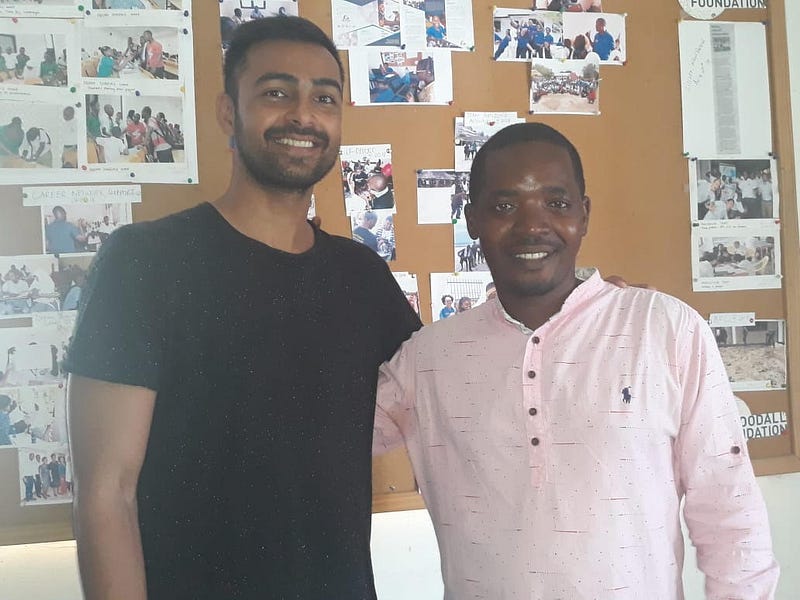
After the Amani course, Ocheck invited me to Tanzania to run a couple of sessions for BFC. I had the privilege of teaching human-centred design to about fifty university students and running a mini-training session for his team on learning how to learn. I probably learnt more from them than they did from me. But more importantly, I got a glimpse into Ocheck’s world. I got to see in-person what Ocheck had been talking about — there is a gap in the Tanzanian education system that needs to be bridged. I also got to see the admiration Ocheck has won from the people around him. He might not have a family, but one Saturday morning, some of the brightest minds of Tanzania — PhDs, engineers, UN fund managers — showed up on their own stead to brainstorm ways to improve the productivity of Tanzanian youth. And they showed up for Ocheck. Not only because of who Ocheck is and what he has done, but because of what he stands for. As much as this is Ocheck’s story, what makes me believe in him is that this is not about him, this is about something bigger.
And that’s what I have bought into — what he stands for. When we accepted our differences, there was something magical that developed in the way we worked together. There are powerful synergies if you can learn how to combine local commitment with foreign expertise. So while the “white saviour” complex is a thing, there are ways to work with committed local leaders as long as you’re willing to not pretend you know everything and drop the ego.
There is still a long way to go for BFC. It has not been easy, and it is not going to be easy. But after what Ocheck has pulled through, this might be more of a cakewalk.
Humility
I remember one morning in Nairobi, when Ocheck and I were walking to class, he said, “Anish, I really want to forgive my father, but I don’t know how.” This is the same father who refused to acknowledge Ocheck as his son for the first twenty years of his life, who threw him out of the house to fend for himself. I didn’t know what to say.
In Tanzania, Ocheck was adamant that I visit his house — a little studio which my one month of rent in New York could cover almost six years’ worth of rent for. He said, “Anish, in Tanzania, as a guest, I must host you at least once. And yes, this place is small, but my landlords treat me like a part of their family.” He pulled out a photo album and walked me through his past. There was a photo of him as a cook serving little kids while he was on the street. There was one from when he had built his own little street stall that sold fries. There was another of him as a house boy. Another as a pastor, one of him singing, one of him during his graduation, and a few more that he had somehow managed to hold on to. There were no pictures of him before the age of fourteen. And to think, my little one-year old niece already has thousands, enough to fill a truckload of photo albums.
Despite everything, there is immense joy in Ocheck. There has been nothing simple about his life, yet he lives simply. He is not perfect but he champions humility, grit and faith, and an unwavering belief that his vision of a more productive, developed Tanzania is not just a pipe dream. This humility has humbled me. And for all that and more, this is an unfinished story that needs to be heard.

Escaping Conversations Not Worth Having
I am running out of patience for conversations that aren’t either humorous or sensible. Darker the humour, the better. The more truth plus humility plus sophistication, the more engaging.
But we prefer gossiping. This psychologist has argued that 80% of average conversations consist of gossip. It’s apparently “essential” for humanity.
Some other research says that we spend 60% of our conversations talking about ourselves. This doesn’t overlap well with the gossip stat unless we are gossiping about how everything screws us over. I, me, MINE.
Another study says that 60% of us lie at least once during a 10-minute conversation. And ooh, this bit is great – men generally lie to make themselves come off better whereas women generally lie to make the other person feel better.
I know all this sounds condescending. I am not, by any means, a 100% innocent here, but I am trying to beat those damn percentages.
A good friend preached not-so-long-ago that he refuses to have a touchy conversation without having a decent understanding of the opposing viewpoint. Let’s take guns for example. He, the friend, is anti-gun. So according to his sermon, he will only debate with a gun aficionado after understanding the depths of the pro-gun argument. He says Anish, I get livid when the other side doesn’t understand my perspective, so it’s only fair if I give their perspective a go.
Ever since the friend preached this to me, I have become a pious follower. Sadly, the majority haven’t yet been converted.
There is also the case of sensitivity. If you haven’t read Lukianoff & Haidt’s the Coddling, get on it already. They studiously claim that we, especially them Gen-Zs, are getting overly sensitive to being offended. Being offended is not the same as intentional bigotry. The charity of intention must be given to the speaker, at least in the beginning. This quote from their book summarizes this issue that is especially rampant on college campuses in developed countries:
The number of efforts to “disinvite” speakers from giving talks on campus has increased in the last few years; such efforts are often justified by the claim that the speaker in question will cause harm to students. But discomfort is not danger. Students, professors, and administrators should understand the concept of antifragility and keep in mind Hanna Holborn Gray’s principle: “Education should not be intended to make people comfortable; it is meant to make them think.”
A version of this happened to me recently.
A well-meaning friend asked me for feedback, and I was coy. She poked, come on Anish, let it rip. So, I gave her an objective observation as feedback. She seemed to have taken it well then.
A week later, I realize she has stopped talking to me. I had no idea what was wrong. When I inquired, she said you crushed my work that took months of sweat and emotional turmoil to put together. I reminded her that (a) she double asked for the feedback and (b) the feedback was an objective observation, NOT some random “it sucks because I don’t like it and I can’t tell you why.” To be fair, she apologized. But will I go there again? Cautiously, if at all.
Then, there is the hey let me bring up the exception to this argument and use it to debunk it completely. John smoked marijuana and ended up in the hospital possessed by a satanic version of Joseph. Thus, marijuana is evil for everyone. Never mind that this is an exception. An exception that proves the rule, maybe. Please don’t abuse an exception. More importantly, please don't solve for the exception.
There is also the hypocritical aspiration that humans should be perfect and if they make one mistake, irrespective of its magnitude, everything else is irrelevant.
Musk is a great example here. He’s divisive and I honestly don’t know why. Yes, he should watch his Twitter-fingers, be careful who he calls a pedo and be less of a dick as a boss. But, to use that to make him a villain while he is almost single-handedly trying (and succeeding) to save the Earth doesn’t make sense. Yes, he’s not perfect and you don’t have to be okay with his missteps, but to brand him as an asshole is to discount the exponentially more good he is doing than the average good person. Please have a holistic perspective.
Related to this is the illusion that you know more than you do, and then spend the next two hours arguing about something you know little about. Especially without the humility or awareness that you might not know enough.
I fall in this trap often. Sometimes as the guy who thinks he knows more, but more often as the bemused guy who ends up trying to have a conversation with someone who isn’t really informed or looking to concede to the facts.
Our big fat egos get in the way. And if your big fat ego continues freestyling without conceding to your own self-awareness of your big fat ego, then, well.

Also, Nassim Taleb once tweeted:
Never complain about people, no matter how justified. Just drive them to complain about you.
This whole post seems like one giant complaint. And maybe it is. Or maybe it’s a largely accurate observation. You're free to complain about it.
But the point is, we talk largely about ourselves, mainly gossiping; lying more than just occasionally while arguing against something we don’t fully understand, only to get offended rather quickly, setting double standards as we get swayed by the exception while also imagining we know more than we actually do, and then letting our egos get in the way even when we realize we are wrong.
Why have conversations at all then?
I am not saying I am fully innocent here. I am not. And I know plenty of folks who are capable of great conversations. And I love having conversations with them.
My quarrel is with myself.
When I encounter a sorry conversation, instead of hitting the escape button, I yearn to “knock sense” into the senseless. There is where I fall. I can’t let go. And then my emotions get in the way and I become what I have been berating. Especially when someone is irrationally trampling on grounds I am seasoned in.
Instead, what I need to do is disconnect. I am no preacher, no atheist missionary. I don’t have to enlighten everyone or get my point across every time. I just need to let go.
It’s time to create a new if-then loop. If person X is generally well-read, humble, gives the charity of intention and is open to reaching some sort of a compromised resolution, then continue the conversation, else person X is an annoying fuck and stop the conversation immediately.
This way, I’ll hopefully save some anxiety, however hard it might initially be. Maybe a good way to pull the plug is to throw in an insensitive, dark joke that effervesces the sanity of the poor victim. Deserved.

Round 2: Kenya
Hello Nairobi! Hold on, let’s back up for a second.
For the good or the bad, I am a planner. Almost two years ago, I grew a pair and quit corporate, conventional life. To justify it, I needed a plan – some direction, some inkling of a purpose to twinkle through. I dug deep and came up with a “big” goal that I scribbled down in pen – buzzword disclaimer: I will dedicate the rest of my life to fighting multidimensional poverty through economic empowerment, leveraging first the power of social enterprise. It sounds all flowery, cliched and dandy, but it’s something that has stuck for the last two years. And that’s been powerful.
I had my “big” goal written in pen, and now I needed a bunch of smaller goals written in pencil that would contribute in some way to this mother of all goals. There were a few options I was contemplating – (1) just go to India and start a social enterprise, (2) do your MBA with a focus on social innovation or (3) educate yourself by working around the world in the social impact space.
The India option was a direct, hail-Mary-esque route. Entrepreneurs are generally impatient and joyfully jump into the deep end without a life jacket, so this was tempting. But I did not want to be this slimy know-it-all hotshot who quit New York to start something in India, pretending to know everything.
The MBA was tempting for reasons of glory. An MBA from a top school establishes your ethos instantly, apart from exponentially feeding your already-bloated ego. My mentor probably gave me one of the best pieces of advice on this – do an MBA if you genuinely need it to achieve your goals. Intelligent people are the masters of justifying almost anything. And it’s dangerous because these arguments can be powerful enough to justify delusion. I didn’t want to delude myself – I didn’t need an MBA to conquer my goals.
To be clear, I didn’t default to option 3. Educating myself by working across the globe had always been my preferred option. The other choices had to be considered though if I was going to be logical about this. So, I considered those glorified options and dumped them, deciding to create my own custom, cheaper global volunteer-based “MBA”. I would spend six months working in Latin America, six months in Africa, six months in Southeast Asia, six months in India, and then settle in somewhere in Maharashtra to ignite my social enterprise there. All the “working” would obviously be connected to social impact.
My first hurrah turned out to be Guatemala. I was to spend six months there working for a social enterprise accelerator. The six months suddenly turned to fifteen. And my ambitious custom six-month rotational “MBA” went caput. But that’s the beauty of it. It made sense to spend the extra time in Guatemala. After six months, I had just about established myself. The unpaid fellowship soon became a decently paid job, and I got a chance to really add value while learning more than I could have imagined. Option three gave me reasonable flexibility.
The big goal had still not changed. But, it was clearly time to just adjust the smaller goals a little. Southeast Asia was out. Africa still needed to happen, but I couldn’t afford another fifteen-month stint, at least in my head. Enter Amani Institute. The program that they offer serendipitously landed in my inbox — it was like magic straight out of the wand of J.K. Rowling. This program is a 9-month certificate in Social Innovation Management, but more importantly, it involves a 4-month apprenticeship with a local social enterprise. They believe in learning by doing, and all this had me taking my shirt off and running around yelling hallelujah. I got in, secured an apprenticeship with Livelyhoods, and here I am in Nairobi.
This is my Round 2. In Round 1, I worked with a bunch of social entrepreneurs working in all kinds of cause areas. The breadth was what I wanted but we didn’t go deep enough. In Round 2, I will be working with one enterprise that is trying to fight poverty through job creation, sublimely aligned with what I want to eventually do in India. Add some theory on communication, leadership and management, a network of like-minded but diverse professionals, and I am all giddy right now. The program starts tomorrow. The first week is a quick crash course on biomimicry. We are going on a retreat in the middle of nowhere in Kenya to introspect and connect. Cliched, I know but I love it when you experience why clichés are clichés.
I found out about this while I was in the middle of Bolivia. I still had a month of travel left. I was about to see Colombia and parts of Guatemala that I hadn’t yet. But all the while, I couldn’t wait for tomorrow, for the start of this next round. I feel so spoilt. There I was, travelling the world, but all I could think of was getting to Nairobi to start my apprenticeship. That’s what is so powerful about direction. “Work” becomes play, and conventional pleasures become unwanted distractions.
Find your big goal. And make it happen. It doesn’t get better than that.

Harari-chal Earthquakes
I finished Homo Deus a week or so ago, and just wanted more Harari in my life. And I got more Harari in my life. Enter 21 Lessons for the 21st Century. And it was a mind-numbing, questioning-everything 100,000-foot skydive that capsulated an explosion of knowledge, thought and re-evaluation. Anyone who really wants to understand what we Sapiens are dealing with today should read this book. I.e. everyone.
When reading Harari, there are two contrasting feelings that engulf the trenches of the biochemical reactions in my head:
1) Sensual history word-porn can't stop
2) Constant existential crises
#2 haunted me multiple times. Constantly.
Harari states clearly that his predictions are intentionally more negative as it's important to prepare for the not-so-dandy possibilities of the future. He narrows this down to three global challenges - technological disruption, ecological damage and risk of nuclear obliteration. He explains all of this with brutal, truth-based logical explanations that are hard to disprove unless you strawman them. And strawman-ing is for chums. Steelman him all you want and please invite me to the party.
Besides the future, he also touches on all the key aspects embroiling and polarizing our society today - immigration, terrorism, fake news, education, meaning, nationalism, data and fourteen such other existential battles. My attempt to summarize any of those will definitely be a fool's errand.
So I won't. Instead, I'll talk about my "feelings" towards it.
There is so much knowledge in this book. So many ideas, thoughts, considerations that few have the intellect to imagine let alone the courage to say. In parts, I felt stupid, because of so many "obviously-how-did-I-not-think-of-that?" moments on community and education. In parts, the book validated some of my thoughts on meaning, religion and data. In parts, the book explained things that didn't make sense before such as the psychology behind immigration, ignorance, and basic Sapiens instincts. In parts, the book created notions that I probably never would have even thought of imagining, such as his takes on culture and post-truth.
We are no longer racists, but we are culturalists, and that can be as dangerous because it's more aligned with our current moral construct. We need fiction and have needed fiction to survive, even while we chase truth. The systems and the society we have are too complicated for an individual to understand so kill all those crazy conspiracy theories. Superhumans will happen.
All of that might just seem like random statements, but Harari chisels it out with such flair; combining history, stories and ideas in the surreal adventure that this book is.
What really rattled me was his concrete belief of the destruction of our utility. Most jobs will be automated away sooner rather than later, and this time, it will be different to what happened in the industrial revolution. Why? Because last time, machines freed Sapiens from physical tasks, leaving room for us to dominate cognitively. AI and Machine Learning will take over our cognitive abilities, and there is no third value-add skill that we possess. Then what?
This is personal because I want to spend the rest of my life fighting multi-dimensional poverty through economic empowerment, which basically means job-creation. It wasn't like I was unaware of the threat of AI before, but Harari made it a lot more real and inevitable. Not through fables, but through logic. And logic is a strength I pride myself in, which in this case, for a split-second, felt like a weakness.
But knowing is more important than living in ignorance. Thankfully, Harari agrees with me on this. And now I know. This doesn't change my goal of fighting poverty through economic empowerment, it just makes it harder. Job-creation is and was one way of doing it, but there are others. Sapiens will always need and want purpose, dignity, economic independence and community. We will just have to come up with different ways to attain them whilst our ecological haven crumbles and Homo Deus contemplate the genocide of us Sapiens.
Read Harari. Read all of it. Read it again. And then again.