

Traveling Is Dead. Get Immersed And Contribute.
Tourism was dead ages ago. Travelling is dying, if not already dead. What’s in right now is contributive immersion. Here me out.
I have two months before my next stop. Thought I would take advantage and travel a little. But, a different kind of travel. Less about seeing, more about being in my head. Less about meeting people, more about reading, writing and thinking. Less about experiencing, more about retrospection. Or something like that.
There was this other weird feeling I was battling before I started this two-month “adventure”. I wasn’t that excited. Here I was, with two months of freedom to travel to wherever I wanted. This luxury that most people crave. This bundle of time that not many people have. And look how spoilt I am. I am not even excited.
Excited or not, I was doing this. I started in Holbox. This quaint, secluded island in the north-east nothingness of Mexico. I remember a random Mexican entrepreneur had mentioned it to me way back in 2017, and it stuck. Aside from the usual commentary of it having stunning beaches and tranquillity, it was also supposed to be Mexico’s best-kept secret. At least back then. Now it’s probably Mexico’s “best” kept secret – in quotes, with a winky face right next to it.
There is this steaming irony while being a tourist. A hypocrisy of sorts. I, a tourist, want to travel to a place where there are no other tourists. I, me, MINE and no one else. Besides my friends, of course. And some local people who I can somewhat communicate with. You know, to get a “local” experience.
Holbox is now infested with tourists. I took a local bus from downtown Cancun to get there. When I got to the bus station, I was wondering which gate I had to be at. So, I did what most tourists would do. I looked for a gate with a line of tourists. And there they were, like a bright orange buoy in a sea of locals. Backpacks, flipflops, an air of superiority and yes, I fit right in. They were also going to Mexico’s “best” kept secret. Obviously. Comforting. Easy.
Holbox is stunning. With or without tourists, the beaches are pristine. The water, as blue as turquoise. No cars, only golf carts. No real roads. Tiny. Hammocks in the middle of the ocean. Bioluminescent plankton sparkling in the blackness of the night sky. Birds, crocodiles (saw three of these salt-water beasts), mosquitos, flamingos. Sandbars stretching into what seems like the middle of the ocean. Sunsets as pure as the painting of a ten-year-old – cloudless, round, perfect.
And then there is capitalism. Opulent hotels, customized tours, yoga (of course), a lot of tourists, a lot of UTL (Universal Travelling Language / English). People travelling in twos, threes, fours. Folks from literally all over the world speaking tongues hard to decipher, bonding over how accents make things sound funny. “How are the beaches?” Beaches are sometimes mispronounced in translation as “bitches” because “e” = “i” in Latin languages, etc. Queue a plethora of pun-tastic jokes, especially among the men. “The beaches in Holbox aren’t as fun as the beaches in Cancun.” Ha. Ha. Crude. But funny. A good way to bond, apparently.
I heard the same pun-ny jokes in Costa Rica. “The beaches here are so beautiful.” After five days in Holbox; reading, thinking, observing and not making friends, I made my way to San Jose. I was done with beaches and wanted some hiking, mountains, forests, waterfalls. Waterfalls. Waterfalls are special. Yes, go chase them waterfalls if you can.
A friend of mine was travelling in Costa Rica as well. Isolated with all this isolation, I thought I’d join him for a couple of days. He was “Twaling.” It’s apparently this new concept where you travel with a local. So, we had Adrian, our local, taking us around. He wasn’t really our guide. He was like an acquaintance who quickly became our friend. He took us to places he found cool, sometimes off the beaten tourist-y path, and sometimes on it. In a short five days, we got more of a local vibe then we would have if we did things ourselves. We rappelled down waterfalls not infested by tourists. We saw a giant seven-hundred-year-old tree of peace, leaf-cutter ants, sloths, scorpions, armadillos, monkeys, spiders, snakes. We stopped in the middle of nowhere to drink coconut water and sugarcane juice without fear. We sat alone in natural, volcanic hot springs in darkness lit only by the candles that Adrian had strategically placed. Yes, an upgrade. But how long can you get a local to just show you around?
Costa Rica is a spectacular mass of land with everything you can imagine. It is a well-run country that decided ages ago to get rid of its army and invest this extra money into education. So, you genuinely sense a general level of development across the board. Almost all of Costa Rica (~98% apparently) is run on renewable energy – hydro, wind, solar. The government also thought it would make sense to invest in making tap water drinkable. Sounds expensive but apparently the medical costs you save from reduced water-borne diseases very much offset the extra cost of purifying water. Plus, it is just a good thing that Governments should do. And, like any intelligent Government, Costa Rica also decided to make the most of the tourism potential that nature had blessed it with.
So somewhat like Holbox, Costa Rica boasts a string of fancy hotels, natural reserves, hanging bridges, ziplines, a lot of tourists, a lot of UTL and typical touristy inflation – shit’s expensive. They also go the extra mile by making things as eco-friendly as possible. “This is an eco-friendly wildlife reserve with a perfectly constructed hiking trail, spotted with comfortable benches every hundred meters to rest, and we are working on making the hiking path wide enough to meet global accessibility standards for the less fortunate.”
All this is awesome, but where has the rawness of brute travel gone? Yes, I get to see pretty things and do safe, fun activities, without any communication issues thanks to UTL, but am I really immersing myself into the culture and the nature that a foreign country offers? Why go there at all? What am I even looking for when I go to a new country?
That’s the crux. What are you looking for when you go somewhere? If you’re looking for an escape, a place to recharge, then being a perfect tourist in a comfortable, touristy place is great, and power to you. If you’re keeping a count of all the countries you have visited, and the number of likes your Instagram posts get, let’s not be friends but do what you need to do.
You could also be a pitiful inbetweener. Someone who wants to genuinely travel and see and absorb and experience, but just doesn’t have the time, the budget or the passport to do so. All you can afford is a couple of weeks a year, imprisoned by your lucrative corporate carcel. Then, you can’t help but plan out every hour of every day, making the most of the limited time you have, and doing all the “touristy” stuff because not only is it easy, it is also rationally your best bet. Unfortunately, despite your traveller instincts, you can’t help but be a tourist. I get that. I was in that prison.
And then you have the gap-yearers. The “true” travellers. 365 days of travelling the world, or a continent or a bunch of countries. The freedom to not really plan things out, to take it as it comes. To fall in love and then just stick around. To live in hostels and yachts. To get wasted and then get laid. To take surf-lessons and salsa classes. To teach UTL or bartend to earn a bit of dough. To experience the world. To get “out of your comfort zone”. To be interesting. To have stories to tell.
One of the most uninteresting things is someone who wants to be interesting.
To me, all of that is not the essence of going to a new place. You can recharge in a fancy hotel down the road. If you want to rack up the number of countries you have visited to prove how “worldly” you are, why even bother spending more than a day or two in a country – just go to the capital city, take a dump at the airport, and then fly to the next capital city. Simple, and you’ve even laid your mark. I just feel sorry for the inbetweeners. I have been there, and it sucks, but honestly it isn’t hard nowadays to break out of your prison. Gap-years are better than two-week affairs but frolicking around from country to country for a couple of months at a time gives you only a flavour of the place. Tastes can be deceptive; an entire meal is what you should be looking for. And, many-a-time you get stuck with other gap-yearers like you, or with locals who are only friends with foreigners. It’s a deceptive little bubble. A bubble that a part of you wants to burst out of and a part of you wants to stay in.
Ugh, why the negativity, Anish? What do you want, why is travelling dead?
If you really want to see, understand, experience, learn and grow from a foreign culture, you must immerse yourself for a significant period. At least six months. Only in one city or town or village. And you have to be contributing there. Adding value in exchange for imbibing localness. That is immersion.
In the past, long-term travelling gave you this. But today, travelling around and just “being” is contaminated by the tourism industry. There are so many people travelling, being tourists and taking country-hopping gap-years that if you enter a country and bartend at a hostel, you’re barely getting out of your comfort zone. You’re still in that little bubble with just enough moral license to convince yourself that this little bubble is where I should be. When in fact, you’re better off bursting out of it. That’s why travelling is dead.
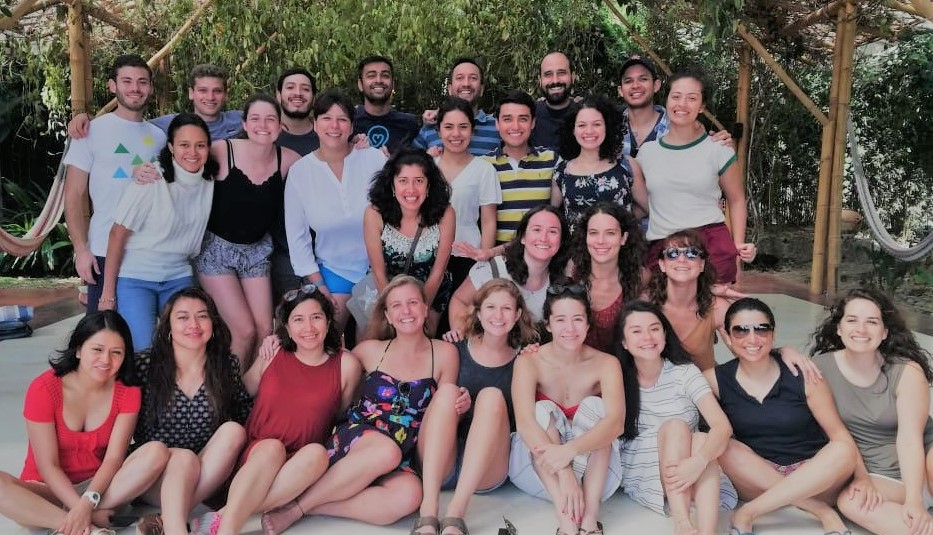
I lived and worked in Guatemala for fifteen months. It started with a six-month fellowship where I was leveraging my finance skills to help local entrepreneurs out. I ended up getting hired by the company and really immersing myself in the heart of Guatemala.
And no, it wasn’t perfect. Being a foreigner, I surrounded myself with enough foreigners conversing in UTL. Some of my closest friends were not locals. As much as I was aware that I did not want to be in a bubble, I sometimes was.
The saving grace was the work I was doing there - my contribution. For a majority of my time there, I was working with locals, supporting local entrepreneurs, understanding the local landscape of social impact, and living the local life. That’s what made the difference. That is where the learning, the growth and the cultural exchange happened.
And it wasn’t always fun. Learning a new language is hard. Cultural differences can be frustrating. Homesickness is always a thing. But that’s the point. No good movie, no good story, no good experience is a 100% positive.
So here I am in San Jose, Costa Rica, trying to travel for a couple of months, and I am barely excited. Some sort of societal pressure has made me want to travel and see things the old school, dead way. A part of me feels like I have earned it after the intense fifteen-month stint in Guatemala. But the truth is, once you experience true contributive immersion, old school travelling is just not the same. Tourism is even more of a joke. My sister felt this after her three-year stint in Spain, and I’m feeling it now too. But I am still going to continue. Yes, shut up, I know. I’m friggin’ human, unfortunately.
I’m glad you’ve made it this far in this long, gloomy post. I am not saying that you should never travel or never be a tourist. I am not anti-travel. Something is better than nothing, so even if you have a couple of days to get out to a new world, do it. Travel. Tour. Recharge. Experience. See.
What I am trying to say is that there is something far better out there. And it has never been easier to do it (sabbaticals, gig economy, the friggin’ internet). If you want a true, deep, pivotal, worldly experience; find a city, commit to it for at least six months, immerse yourself and contribute. And then, experience the magic.
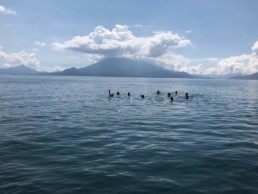
Oh Guatemala, Thank You
Fifteen months. I was supposed to stay there for six. This was my first hurrah outside of “conventional” life, outside of society’s prescribed path to success, and my first hike down this new-found path has been everything I hoped for. And, I am not just saying that to adorn an average experience with fake pearls of positivity – it was not all fun. In fact, it was hard, and challenging and refreshing and exhilarating – in parts, and all at the same time. It was exactly what I had signed up.
Learning a new language is hard – not just to get by, but to actually work in. I arrived in Guatemala almost dumb and deaf, hoping to somehow make an impact and learn at the same time. It’s difficult to add and gain value when you can’t communicate - that was the first mountain I needed to climb. But there were enough folks who spoke English, so I got by and it wasn’t all doomsday. And, the people at work and in the city never made me feel unable or uncomfortable. The support and the patience up this mountain have been humbling. In the end, I don’t think I ever summitted this Everest of proficiency in a new language, but I did come to terms with it, hitting a gear of fluidity that I was somewhat okay with.
There is something beautiful and thoroughly engaging about going to “work” to do exactly what you want to do – not for money, pride, status or power. Alterna, this non-profit that supports entrepreneurs of all sorts in and around Guatemala, gave me exactly that. I was a “Fellow” there to start off with, and soon embedded myself into their DNA, giving blood, sweat and tears as we shook things up. We not only re-branded externally, but we hit the reset button internally as well, emerging afresh. We served over 150 entrepreneurs in 2018 in some form or the other. Our signature event is a five-day workshop where twenty of our more advanced entrepreneurs go through a topsy-turvy journey – from questioning the existence of their businesses to embracing strategies that can exponentially grow their sales and impact. Imagine that, twenty entrepreneurs in one room, sizzling with infectious ideas and ambitious personalities, and us trying to rattle them. The vibe that the space has when all these atoms of energy collide is magical.
I will never forget the feeling after our first, re-thought workshop. All the effort, the fighting, the disagreements, the uncertainty and the moments of discomfort were worth it. We came out flying. Our entrepreneurs were overwhelmed with action-plans, introspection and gratitude. And for a hot second, we, the tribe of Alterna, could reflect. The inner explosion of accomplishment, contentment and pride that I felt that day was so pure, so real. It wasn’t about the money – I wasn’t making any nor did the entrepreneurs pay for this workshop. It was purely about the value that we had added, without any sort of ulterior motives and with only the success of our entrepreneurs in our mind. This feeling, the purity of it, is so important for my overtly rational self. In my five years of hustle in Corporate America, I had never felt this way.
It wasn’t all hunky-dory though. My love-affair with Alterna meant that I was invested – heart, soul and mind. And when you’re invested, your expectations sky-rocket. Some days were hard. Everything takes time, but everything takes a little bit more time in the non-profit world, and I was constantly battling my impatience. I was living a lot of what I had read about when it comes to the difficulties of the non-profit space – a lack of resources, a lack of investment in and on talent, living more or less at the mercy of our sponsors. It was daunting and frustrating, sometimes just like any other job, but this frustration came from the desire to make things better. It is so important to be bothered and frustrated because that’s what helps generate change. I think living is a lot about learning how to positively channel change out of things that genuinely bother you.
One thing that the non-profit space has in abundance is passion. That is sometimes the best part about it. But anything in excess is not necessarily good, right? How can we balance the passion of this space with a higher degree of result-centric rationality? When does passion become a moral license to do just enough to internally satisfy yourself, while not really changing the status quo? I have been thinking a lot about what comes in the way of progress, both internally within myself, and externally when it comes to this space.
Externally, how can we change this moral expectation of demanding extreme sanctity from folks working in the social impact space? Why can’t professionals in this space make good salaries, earn good bonuses for dedicating their life to a cause, and even make mistakes along the journey? How do we start changing that mindset? That’s why social enterprise makes so much sense. Social enterprise adds another dimension to traditional business by roping in morality, because morality is tied closely to what impact truly is. So, if we can combine the fruits of capitalistic business models with the morality of the impact space, holding the latter as the true driving force while keeping the cause as incorruptible as possible, I think we have a real chance at true, scalable impact. I want to embody this and find folks that are aligned.
Internally, I have been battling the idea of patience – what is patience? And how do you find the balance between patience enabling mediocrity versus impatience coming in the way of excellence? It is all about managing expectations, and it’s all about finding the right balance. But what is this “right” balance? I need more practice at practicing that.
It was the hardest when Alterna had won my heart over. I always knew I couldn’t commit myself to Alterna for a longer period, but when you’re invested, it’s that much harder to come to terms with it. Towards the end, it was like the nails were inching closer and closer. My duty was not to do but to empower, to leave behind as much value as I could, without really creating severe dependencies. I am a doer, so this was hard. But I need to be better at empowering, and all this was a lesson at that. My long-term goals lie in India – I will work on poverty alleviation through economic empowerment there. It makes the most amount of sense in terms of the impact I can make for a multitude of rational reasons, and that is and has to be the only way I should be making key decisions. Initially, I wrestled with the idea of starting something right away in India versus taking my time and learning along the way with experiences outside of India. The winner could not be clearer. The amount I have learnt about starting and running a social enterprise without investing any significant actual and emotional resources is incredible. I am so much smarter now, learning from the mistakes and successes of other social entrepreneurs without any self-serving bias that embroils them. The best way to learn is by doing, by embedding yourself not in case studies, but in what is real and could eventually become a case study. There are no formulaic “right” or “wrong” answers. Textbooks are guides for what works in general, but it is important to not be trapped by their rigidity. So, one more stop on this magical school bus and then here I come, India.
Guatemala, to me, was not about the volcanoes, the lakes, the crime or the people, it was about what I was doing there. Yes, the people around me were beautiful inside and out, with those volcanoes constantly exploding my sense of self, and the lake, absolutely stunning. But what defined my time there were the entrepreneurs I worked for and the colleagues I worked with. Everything else was icing on the cake. This icing was delicious though – I met some incredible people, breathed in volcanic air, jumped into the lake letting myself go to the all the Mayan beauty that for once didn’t have to revolve around rationality, saw bravery and struggle, learnt how to shut out love, never got robbed but sympathized with those that did, understood that it is important to have standards for yourself and the people around you, but it is also important to not project your ambition onto those who are not wired like you, cried a river embracing the joys and pains of work, life and introspection, felt more alone than ever and also more accompanied than most, earned more self-respect, laughed a lot, learnt a lot more, gave, got and cherished.
For all that and more, thank you.
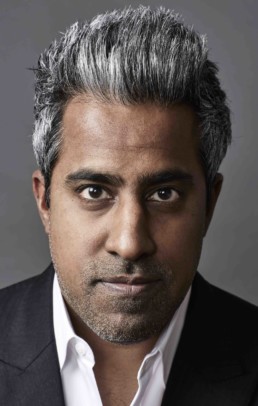
“Winners Take All” — Dissecting Anand Giridharadas’ Nudification Of The Elites
Anand Giridharadas is an alarmist. Of the good kind though.
He spends about 300 or so pages in his new book dismantling the whole concept of how we perceive “doing good” and “social impact”. He systematically calls out a laundry list of people, organizations and concepts that have attempted positive change. This list includes social enterprises, impact investing, foundations run by rich capitalistic, oil-producing, hedge-fund managing “philanthropists”, “thought leaders” such as Adam Grant, Simon Sinek and Thomas Friedman, the Gates foundation, the Rockerfellers, B Corps, the Koch brothers (no surprise here), almost everything about the Clintons, the Aspen Institute, Uber, Summit at Sea — basically all of Silicon Valley — and most importantly, himself. The fact that he includes himself in the list is why we should all be listening and evaluating and changing.
The Book
Anand’s premise, in a nutshell, is that the Utopian idea of “win-win” in the social impact space is just that, Utopia. He believes that despite all the above-mentioned elites spending the best part of the last 30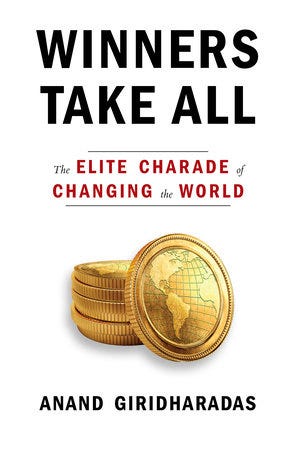 –40 years trying to “do good” while also making money, there still exists an incredible amount of inequality of income. In fact, the data says that since 1980, in the United States, despite all the “great” work of philanthropists, foundations, social enterprises and impact investors, the richest 10% of the population has doubled their average pre-tax income and the richest 1% has more than tripled it. He argues, boldly and fairly, that social good in today's world is a form of moral licensing — “I have donated a couple of mil to charity, so that makes it okay for me to continue drilling oil wells.” He argues that these elites, talk about doing more good instead of doing less bad, and live in somewhat of an echo-chamber, justifying their daily cake by giving a few crumbs to the less fortunate. They claim to want to change the status quo without really changing the status quo, without sacrificing their luxuries.
Anand does this with a flurry of examples and facts, without being afraid of even calling himself out, let alone his friends. He takes a whack at understanding the cognitive dissonance that some of the elite enslave in their heads but do little about. He spends little time on proposing a proper solution, but that’s not his goal — his goal is to unearth the roots of the problem, and he mentions that intent, albeit somewhat indirectly. When he does talk about solutions, he argues that some people (the rich) need to lose or sacrifice something for the less fortunate to win. And he believes this can only happen by changing the “system” — that is by changing policy and law, in place of putting band-aids on the current tax-haven-y system. In a couple of words, his solution is better government.
My Head
While reading all this, I went through a rollercoaster of emotions — from wanting to hiss at him for trying to dethrone some of my core beliefs to wanting to hug him for his brave but tactful dismantling of the powerful. I believe in social enterprise. I believe that some sort of win-win is the only scalable, sustainable, long-term solution. I believe that the private sector has a role to play in solving today’s biggest problems. This book was the first thorough attack on these core beliefs of mine. So, until the very end of the book, I did not know which way I would lean — does he have some sort of glory-seeking duplicitous agenda? Or does he actually have a point underneath it all?
What sold me was his acknowledgements chapter. In probably one of the best acknowledgements I will ever read, he convicted himself as being very much a part of the problem. He was complicit, guilty. But, being a part of the problem is the best way to diagnose it and understand it. All he needed to do was find the courage. And he did. It started off with an off-topic speech at the Aspen Institute conference and has boiled into this book. He just told these emperors that they are not wearing any clothes.
So gallant, and I am so a fan.
My Take
Having read, absorbed and said all that, I still believe in social enterprise. I still believe in the power of the private sector to contribute towards systemic change. I also believe in having difficult conversations. I believe that criticism is an absolute necessity for growth. I believe that understanding all sides of an argument is crucial for progress.
So Anand, here is my take.
I am not going to argue against your argument on foundations, philanthropists and thought leaders — I agree where you are coming from and frankly don’t know enough to warrant a strong opinion. The only portion I want to argue for is social enterprise. The devil is always in the details and when it comes to SocEnts, that detail is the definition. For me, a social enterprise exists solely to solve a real problem and uses a financially sustainable business model to solve and scale it. It is profit-seeking to reduce dependencies on donations, grants and other one-time indirect revenue, but it is not profit-maximizing. A true social enterprise is tested when it needs to decide between maintaining its impact and increasing its margin, and in this “or” case, it will always stay true to impact. At this point a whole bunch of arguments are probably exploding in your head — what is a “real problem”? What do you mean by “impact”? Definitions are theoretical so can this “social enterprise” really exist? Isn’t “social enterprise” just a band-aid?
The biggest issues faced by the social impact space is defining impact / “real problems” and measuring impact / solutions. This can be a slippery slope, so for the sake of this argument, let’s settle on the 2030 SDGs set by the UN as the real problems we need to solve. They are not perfect, but I think they are the best we’ve got, and it is important to have a central body align as many people in the world as possible.
“True” Social Enterprises
Can these social enterprises really exist? Yes, they do exist. Samasource exists to fight poverty by creating meaningful “microwork” while simultaneously providing vocational skills. Upaya Social Ventures is focused on ending extreme poverty and is trying to do so through job creation. They spend as much as 10% of their expense budget on impact measurement (which is high), and no, they are not doing it for their board / investors, but they are doing it for self-governance. Financial return is very much secondary. Babban Gona is catalyzing small farmers in Nigeria with a goal of securing the country’s economic future. Husk Power Systems converts rice husk into electricity in a financially sustainable way, and lights up homes across India and now, even across parts of Tanzania. Algramo is battling the “poverty-tax” in South America by providing necessities like rice, sugar, chickpeas, detergents, etc at a lower cost to the rural poor. EduBridge exists to fulfill the “skill gap that exists currently between semi-urban/economically backward youth and the skill requirements of the high-performing companies/government organization” in India. Yes, these are just six examples of true social enterprises, and you could argue that there are plenty of so-called “social enterprises” greenwashing their way to sizeable financial returns and not actually making any significant impact. But my point is less around how many of these currently exist and more around how many of these should exist.
Public + Private
The other question that might have popped up in your head is — fine, these social enterprises are doing good things, but how are they changing the system? As I said, I don’t know if the majority of social enterprises are “greenwashers” or “true” social enterprises, but that is not where the crux of my argument lies. I believe that systemic change needs both the public sector and the private sector to play its roles. I agree with you on the importance of policy, government and taxation, but I also feel that policy needs to be significantly supported by social enterprises that can help foster and scale significant systemic improvements. Steve Case also talks about it in The Third Wave where he stresses the importance of policy and partnership along with the traditional elements of people, perseverance and passion to carve success in the next chapter of innovation. Yes, you probably include him and the Case Foundation in your list of complicit elites, but that doesn’t mean he doesn’t make sense.
“Win-Win” Can Exist
This also comes back to your “win-win” argument, and again definitions matter. If win-win is defined as making millions of dollars and then trying to also simultaneously donate some of it towards a vague definition of impact — like you, I am not for it. But if win-win is creating social impact with a financially sustainable and responsible business model, then I am all for it. In fact, I think this win-win exists and can flourish. You can fight me on what I mean by financially sustainable at an individual level. But, without going down a slippery slope, I think the effective altruism movement does a fair jobquantifying the level of income needed to be “happy.”
Inequality vs Poverty
To keep with the importance of definitions, I think it is important to highlight the difference between inequality and poverty. I don’t think poverty is a euphemism for inequality. To me, you could end poverty but still have inequality, and theoretically that does not have to be a bad thing. Yes, a lot of today’s poverty is driven because the rich exploit the poor, but that does not have to be the case. In a merit-based society, you could have a just, but unequal economic competence hierarchy. As Jordan Peterson constantly cites, hierarchies (competence and / or dominance) have always existed in humans, and are important to incentivize progress. So, I think definitionally, inequality will always exist and should exist to a certain extent. If we build the right societal structures through policy to ensure that inequality is not driven by exploitation but by meritocracy, the economy could start to sing.
Bringing It In
To tie all this together, yes seismic changes need to be made in the public sphere, even if that means more taxation, and negatively impacting the richest of the rich. But those systemic changes need to be corroborated by an impact-centric private sector which allows solutions to scale — we need to find that fine balance between the public and the private sector, and switch to doughnut economics when it comes to measuring economic progress. Income inequality will not and should not go away, but poverty can and will. What’s important is to ensure we live in this imagined society of ours giving everyone equality of opportunity. But equality of opportunity does not equal equality of outcome.
Thank you, Anand, for finding the courage to write this book. It took me on an emotional and intellectual journey full of twists and turns. I want to be a social entrepreneur, so this seriously challenged my way of thinking. But once the dust settled, I think it has made me more conscious of the importance of systemic change to fuel overall economic and social progress.
Maybe that is why it is important for you to be an alarmist. It is important for someone to push the guilty to the other extreme, and maybe then, they will land somewhere in the middle, which is maybe where you exactly want them to be.
I might be projecting. I might be being naïve and rationalizing because I need some concept of a win-win to exist. But, I am trying to be as conscious of my bias as possible, and hopefully that will help me keep it real when the rubber meets the road.
P.S. Can’t wait to hear you speak at SOCAP18.

The Probability of Survival on a Chicken Bus
I was told never to look up safety statistics of chicken buses here in Guatemala. I was told that if you did, you would probably never ride them. So, I didn’t look them up. Until today.
The Case
A quick refresher on the mystical origins of “chicken buses” – chicken buses or camionetas are retired school buses from the United States that mysteriously make their way into many Central American countries and obviously, to Guatemala. They are repainted and re-branded, sporting shades of colors you couldn’t even imagine adorning a bus, and ripping off brands that don’t really align with the transportation industry (found one with the Playboy bunny once). They are almost creative masterpieces of art. They are also notorious for their need for speed around the mountains of Guatemala, feeling sometimes more like over-stuffed roller-coasters without seat-belts. So yes, it can be thrilling if that is your thing. And oh, they do get robbed occasionally, and drivers have been killed by gangs to facilitate a successful heist of the rest of hapless populous in the bus.
All the above quite directly points to a high perceived level of peril. But I am a numbers guy, so, contrary to popular advice, I wanted to quantify the likelihood of my death on this real, government-subsidized “public transport” option. What I found will blow you away. That is, if you care about these kinds of things. If not, your life won’t really change much.
The Evidence
After my admittedly rapid (but efficient) research on God’s gift to Earth (Google), I found that Guatemala is ranked as the 64th most dangerous by the WHO when it comes to road deaths per 100,000 people. About 22 people out of every 100,000 die due to road accidents here. For context, that’s 0.022%. For more context, Zimbabwe, which gets the honor of being #1 on the list, is at 75 people out of every 100,000, almost 4 times more. For even more context, and I don’t mean to get too dark with this, but there is a higher chance of a Guatemalan dying of Diabetes (70 people out of every 100,000) than you dying in a road accident in Guatemala. Granted, this research is not specifically related to chicken buses, but it can’t be all that more (or “significantly more”) dangerous. That’s because chicken buses are most definitely a part of the subset, and I have not really been impressed by the average non-chicken-bus Guatemalan driver. I tried looking for numbers on chicken buses specifically, but my robust twenty minutes of research did not pull any meaningful information. All I found was anecdotal evidence or what I like to call scary-stories-that-foster-irrational-fear (SSTFIF) evidence.
This quote from the United States Bureau of Diplomatic Security exemplifies some classic SSTFIF evidence. Notice the number of data points they use while describing public transportation in Guatemala:
Safety of public transportation: Poor
The most common resource for public transportation is the network of informal bus lines. These bus routes are serviced by brightly colored, recycled school buses. The buses are poorly maintained, and the drivers are barely qualified, creating an untenable security situation. Additionally, these bus lines are prime targets for extortions and robberies. Bus drivers are habitually assaulted or murdered while on their routes as a consequence of the growing extortion problem.
Or I can do the math for you – number of data points used: 0.
The Conclusion
Look, I am not saying your chicken bus is not going to fly off a hill and into the lake. All I am saying is that after my super-extensive fifteen minutes of research, the overall evidence tells us that there is a much higher probability of you being just fine. You might get robbed, but you will most definitely get a good story out it. Also, you should not fear looking up safety statistics of chicken buses in Guatemala. But, if you do find some data to the contrary that didn’t surface during my rigorous ten minutes of googling, you don’t need to share it with me. I rather not know. Because who am I kidding, ignorance is bliss.
Uncles & Book Reviews
The Uncle
So, my genius uncle is an angel investor (among many other amazing things). He invests in start-ups that make sense and he invests in books of all sorts. I’ll leave the start-ups for later, but let’s shine the light for a hot second on this book fetish of his. He is a serial reader, and his reading speed is the stuff of legends and folklore in our family, described using adjectives that range from photographic to lightening. Apparently, he has found errors in encyclopedias, written letters to editors, stumping them with grammatic finesse that even the Oxfords of the world would be proud. His love and knowledge of and for books is so vast that it is like currency for him. And, he has a big heart with this book-tastic currency. Most riveting conversations with him end with at least two or three incredible book recommendations, and they are always on point. Inspired by his recent foray into angel investing, he angel-invested books in me. He loaned me two books, “as long as I gave them back” and the interest he charged was that I needed to write book-reviews on them. Don’t get me wrong, it was an awesome deal – outside of just giving me the books, it also gave me a decent nudge to devour them before I saw him next.
This blog post is the interest I owe him – maybe not exactly what he expected, but to be fair, he didn’t set clear rules for what these book reviews could or could not contain.
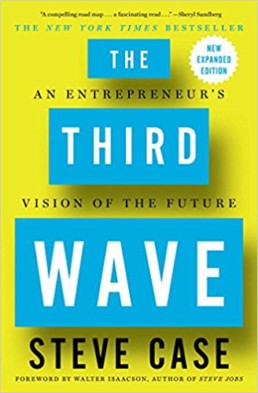
Rapid-fire Book Review 1 - The Third Wave: An Entrepreneur’s Vision Of The Future by Steve Case
I want to be an entrepreneur. That’s why the uncle recommended this book to me. And it lived up to all the hype. So, if you are thinking of starting something or have any interest in the start-up space, indulge in this book for sure.
Steve Case is best known for being the CEO of AOL at the beginning of the internet world. He is basically famous for commercializing the internet as we know it. In this book, he talks about the three “waves,” or the current technological growth phases, we have been in and are about to be unleashed into. The first wave was the creation and commercialization of the internet. The second wave was the proliferation and capitalization of the internet - the emergence of the Googles and the Facebooks of the world - and this is the wave we are still sort of in. But Case says that we are about to embark on the third wave, where the world won’t just be dominated by the internet of certain things, but with the internet of everything. Which, to be honest, makes a ton of sense. After setting these waves up, he uses his wealth of knowledge and experience to predict what would be needed to succeed as an entrepreneur in this third wave.
I think that different people take different things from a book. What stayed with me from this book are the three “P”s that will be needed to succeed in the third wave – policy, partnerships and perseverance. He mentions how the days of sitting in your basement and writing code to create a Tinder-like application are almost gone, and how we are moving into a rapidly developing, morally conscious and constantly connected world. He stresses on the importance of social enterprises and impact investing, and is actually walking the talk through Case Foundation. So yes, he has my heart. One cool thing was that, in this book, he actually mentions and opines on my old CEO at iHeartMedia, which I might or might not have read more than once - they worked together at AOL once-upon-a-time.
Also, it’s a super-easy read, double-spaced and short-ish. Don’t we all love good, quick reads?
Rapid-fire Book Review 2 – The Beautiful Tree by James Tooley
I believe that education is the long-term solution to poverty, and pretty much everything. That’s why the uncle recommended this book to me. And, it provided me with a new perspective on the importance of private education for the poor and the importance of looking at a problem with fresh eyes. If you’re in the education space and you care about poverty, you must read this thoroughly-researched book.
The hypothesis the author, Tooley, spends 300-odd pages proving is that the poor can and are educating themselves. The poor understand the value of a good education and if the broken public sector can’t provide it, they are willing to pay small, in-home private schools to get their children educated. Tooley has spent decades in the education space, and his travels and experiments across the developing world in Asia and Africa have provided him with overwhelming evidence that private schools are not only an actual thing in the developing world, they are a relatively more effective means of education than the public sector, and in many cases – more affordable and more accessible. The biggest challenge he faces in his conquest to prove his hypothesis is to convince local education leaders that private schools for the poor are real. Nobody seems to believe him, and nobody local seemed to have unearthed this phenomenon, including laureates like Amartya Sen. Everybody just seemed to be too close to the problem, refusing to believe something as “preposterous” as the poor paying for education (instead of taking advantage of free public schooling) could be true. Honestly, it’s a fascinating journey, corroborating anecdotes with statistically significant evidence that has the potential to make “education for all” a reality.
The other thing I personally took from this book is the importance of having a global, unbiased perspective while approaching any problem. James Tooley was able to uncover a trend going thousands of miles away from his home, while the people closest were completely oblivious to it. Also, private schools for the poor are essentially social enterprises. The importance of making them financially sustainable provides automatic checks to ensure that there is a level of quality that is maintained. Also, teacher attendance rates are significantly higher than in public schools.
I obviously can’t do justice to Tooley’s years of research in a rapid-fire review. But the book was inspiring, well thought-out and well researched. It’s not the shortest read but is worth the patience and the repetition.
Epilogue
This angel investment of books that the uncle made in me was an impact investment. Both books added value to what I want to do in the future, were extremely relevant and made me blog. I think the uncle should continue making these investments with even more gusto, but perhaps with a clause of sorts that clarifies what the book-review expectations are.
P.S. Here are some other books that have struck a chord with me.
Denting The Social Impact Space
Best thing I have read all year? This. Granted I am heavily biased and that letter is a few months old now, but I cannot stress enough how pivotal this could be for the social impact space. Social enterprise is the future, and by social enterprise, I don’t mean non-profits, or companies that make any little social impact, I mean companies that put social impact over everything else. They are financially sustainable not by relying on grants or donations, but instead, on a profitable business model that is not a slave to profit maximization. A 10% margin, before profit reinvestment, is all you need.
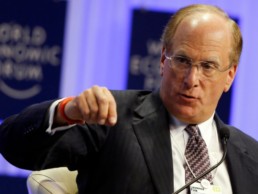
I have this draconian theory that every single organization should be a social enterprise. That letter from the CEO of BlackRock to all their portfolio companies just made my theory a little less draconian. He fully embraces the patiently blossoming stakeholder-centric model over the explicitly capitalistic and banal, shareholder-centric model. And he doesn’t embrace it just emotionally, he lays it out as a future requirement for every company that BlackRock invests in. Yes, he doesn’t explicitly call for social enterprises, but he highlights the importance of having a long-term sustainable strategy and the absolute necessity of a “positive contribution to society.” I’ll take it. This is one the kingpins of Corporate America, with almost $6 trillion in assets under management, setting a precedence, and throwing down the gauntlet. I hope others follow suit.
I think this development is on the back of a recent trend in our generation to want to make a difference. Deloitte recently came out with a study where they looked at the 2014 Fortune 500 global companies and found that 89% of them incorporated at least some sort of social impact in what they were doing. Granted, 53% of them were engaging in good-old “Corporate Social Responsibility”, but again, I’ll take it. Meanwhile, Impact Investing is the new cool kid in the equity space. An asset class of its own, it pits financial performance on par with social impact performance, which is revolutionary for the finance world – it might have a heart after all. Personally, I think the impact bit should take primacy over the financial return bit, but for now, I’ll take it.
It is not all hunky-dory though. Measuring impact is this world’s Everest – sometimes it is just way too subjective for us to be objective about, but the Effective Altruism movement is trying. Psychologically, our approach towards non-profits is a lot more critical than for-profits, and that just does not make sense, ask Dan Pallotta about it. There are still tussles over definitions and semantics. B Corps is a great start, but we still need to create a legal corporate entity classification for social enterprises and incentivize them through substantial tax-breaks. There’s a long way to go, but Mr. Fink at BlackRock just gave us a big push. Here’s to a lot more pushes.